.jpg)

Most people arrive in Gdańsk, plant themselves on the first beach they come across, and wait for the sunset. Then the sun ducks behind the left side, somewhere over houses, towers, and land. Never over the sea. Disappointment guaranteed.
The reason is simple. The Bay of Gdańsk opens to the north and east. A real sunset over the Baltic, the kind where the sun actually touches the water, needs a specific direction and a specific spot. Gdańsk does have those points. There's also a second category: urban panoramas, where warm light sinks into the brick of old townhouses and reflects off the port cranes. Both formats are worth knowing. Below, we go through each one with what makes it work and how to get there.
Sunset times in Gdańsk through the year
In summer, there's no rush. June and July put the sunset between 9:00 PM and 9:30 PM, golden hour starts comfortably after 8:00 PM, and the evening stretches long. Spring and fall narrow the window to roughly 5:30 PM to 8:00 PM. In December, the sun goes down around 3:30 PM, which means with a 9-to-5 schedule, you really only catch it on weekends.
Here's one detail that changes everything: arrive 30 to 40 minutes before sunset. The sun crossing the horizon takes only a moment. The layers of color show up earlier, with orange turning into pink, and pink turning into purple. Catching that means being on site early. The best moment passes quickly, before most people have set up.
Exact times for any specific day are available in apps like Golden Hour or PhotoPills. Just type "Gdańsk." Also, check the cloud cover forecast a day or two ahead. A sunset under a fully clear sky can fall flat. A few clouds on the horizon scatter the light and create the kind of sky people photograph and talk about for a week.
Urban sunset without the crowds at Motława
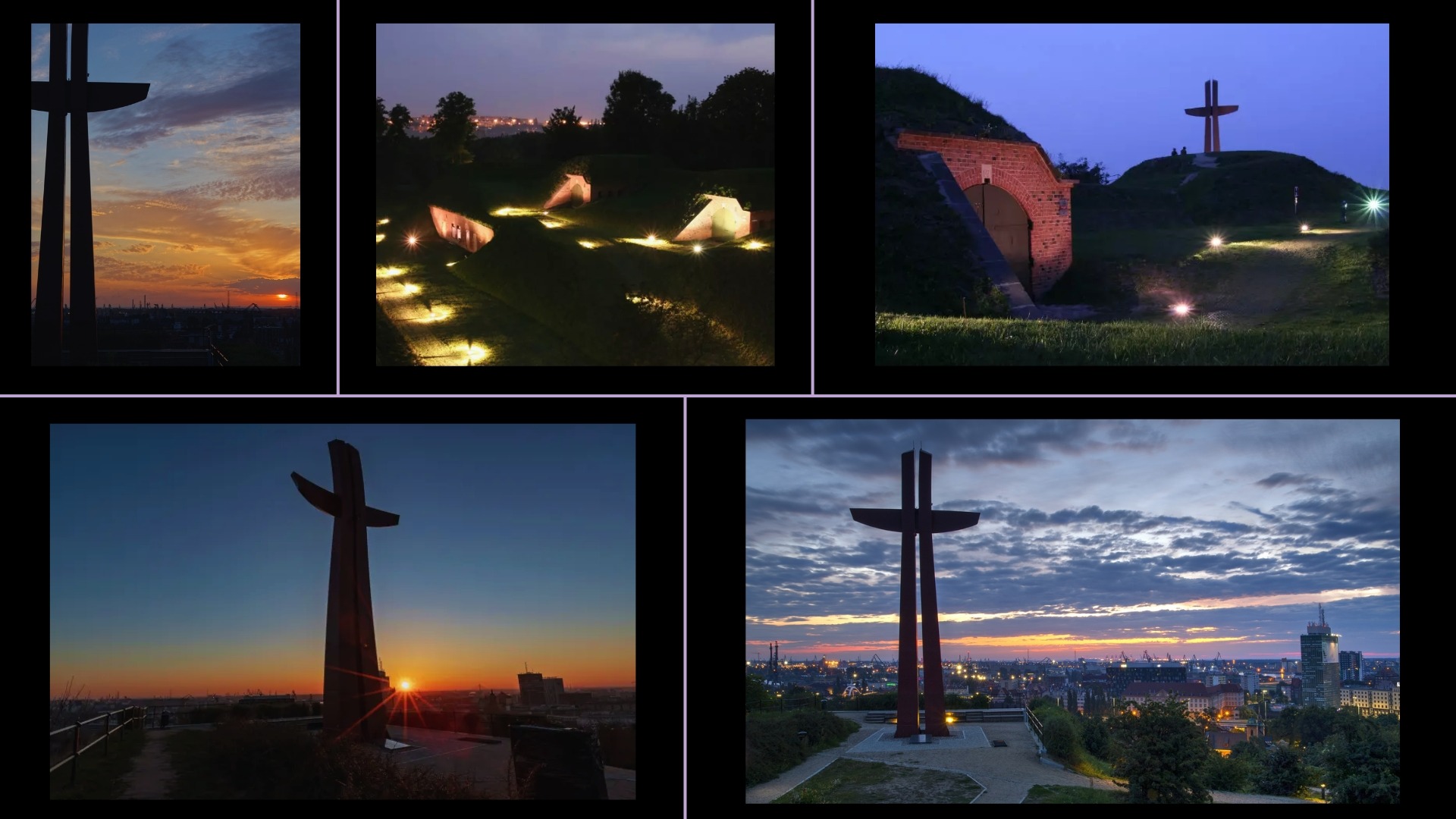
Gdańsk has hills, and most tourists don't know this because they spend their time at the Motława River and Long Market. Góra Gradowa sits literally a stone's throw from the central train station, and most people walk past it without noticing.
It's a former defensive fort, now a viewpoint with a panorama you'd struggle to find anywhere else in the center. From the terrace at the top, you can see the Old Town, Main Town, the port, Westerplatte, and the Bay of Gdańsk all at once. On a clear day, you can also make out the outline of the Hel Peninsula. At sunset, the whole scene gets a golden, then red, backlight from the west, with every spire and every roof working as its own piece of the composition. This is an urban sunset in the full sense of the phrase: architecture, history, and light in one frame.
Entrance is from Łąkowa Street. A few minutes uphill on foot, free year-round.
ECS observation deck
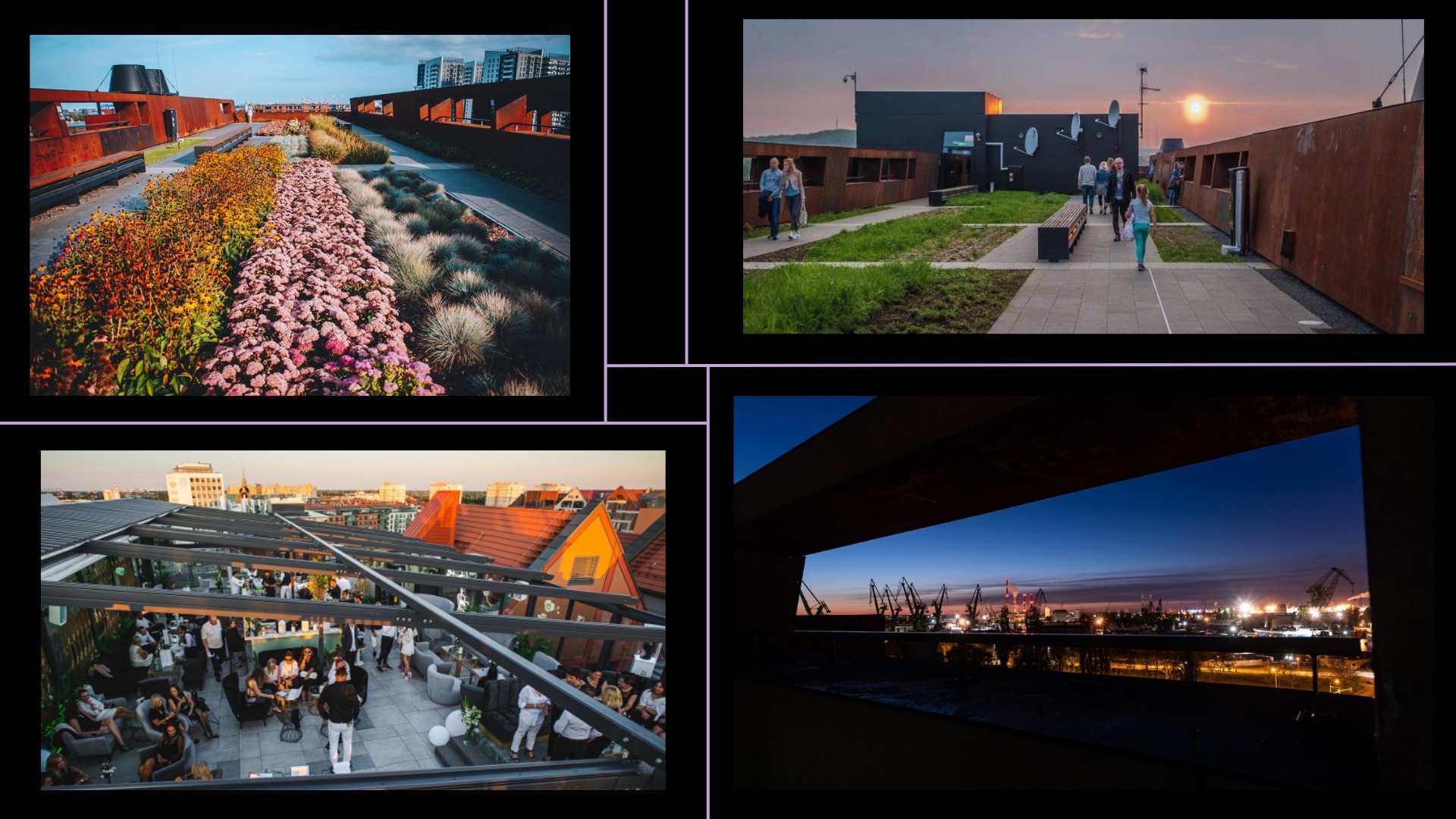
The European Solidarity Center stands on the grounds of the former Gdańsk Shipyard. The 25-meter observation deck is less famous than the building itself, but the view from up there feels more personal than anything you can see from below.
In the foreground, you'll spot the iconic yellow-and-black port cranes, a Gdańsk symbol recognized in photos around the world. Behind them sits the Old Town, with the Motława on the right and Granary Island in the background. As the sun drops, the cranes turn brown, then black against an orange sky. Easy material for a strong shot.
ECS observation deck hours are seasonal and can change, so it's worth checking the center's website before your visit to confirm the deck is open in the evening.
Sunset from the forest
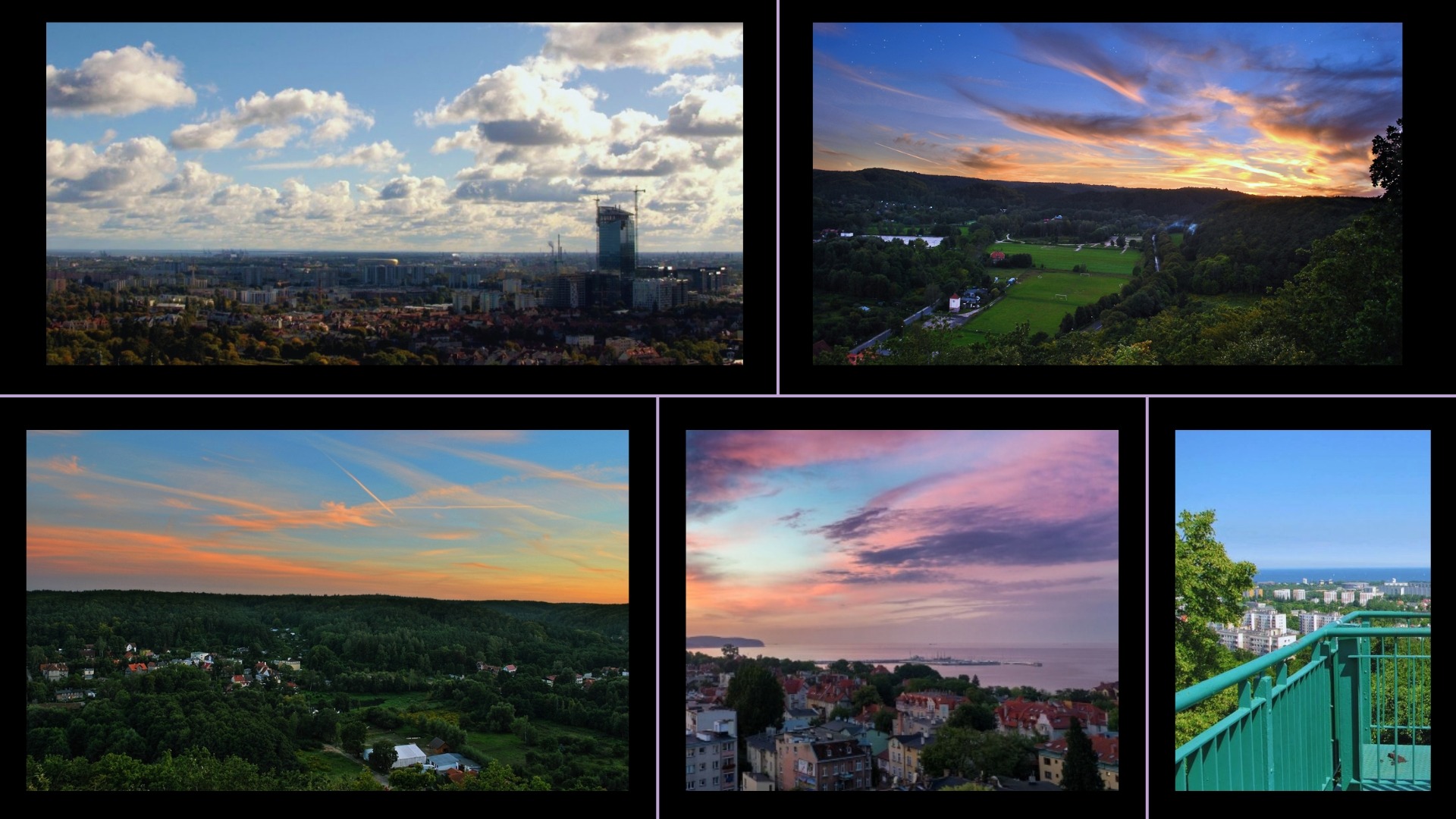
Pachołek is a different kind of experience. Getting there means walking through the forest, a slice of Tri-City Landscape Park. Quiet, the smell of trees, no concrete. The walk to the tower itself already draws a clear line between the city's tempo and something calmer.
The observation tower stands 15 meters tall (recently renovated), and entry is free. From the top, the panorama opens in a wide arc: the sea on the left, the falowiec apartment blocks at Przymorze, the towers of Wrzeszcz, and in the distance, central Gdańsk with the recognizable silhouette of St. Mary's Basilica. Watching the urban sunset from Pachołek gives you different proportions than Góra Gradowa – here, the city is the backdrop, and nature takes the foreground.
One practical note: walking through the forest after dark without a flashlight is a bad idea. Plan your descent before the end of blue hour.
A Gdańsk beach where the sun actually sets over water
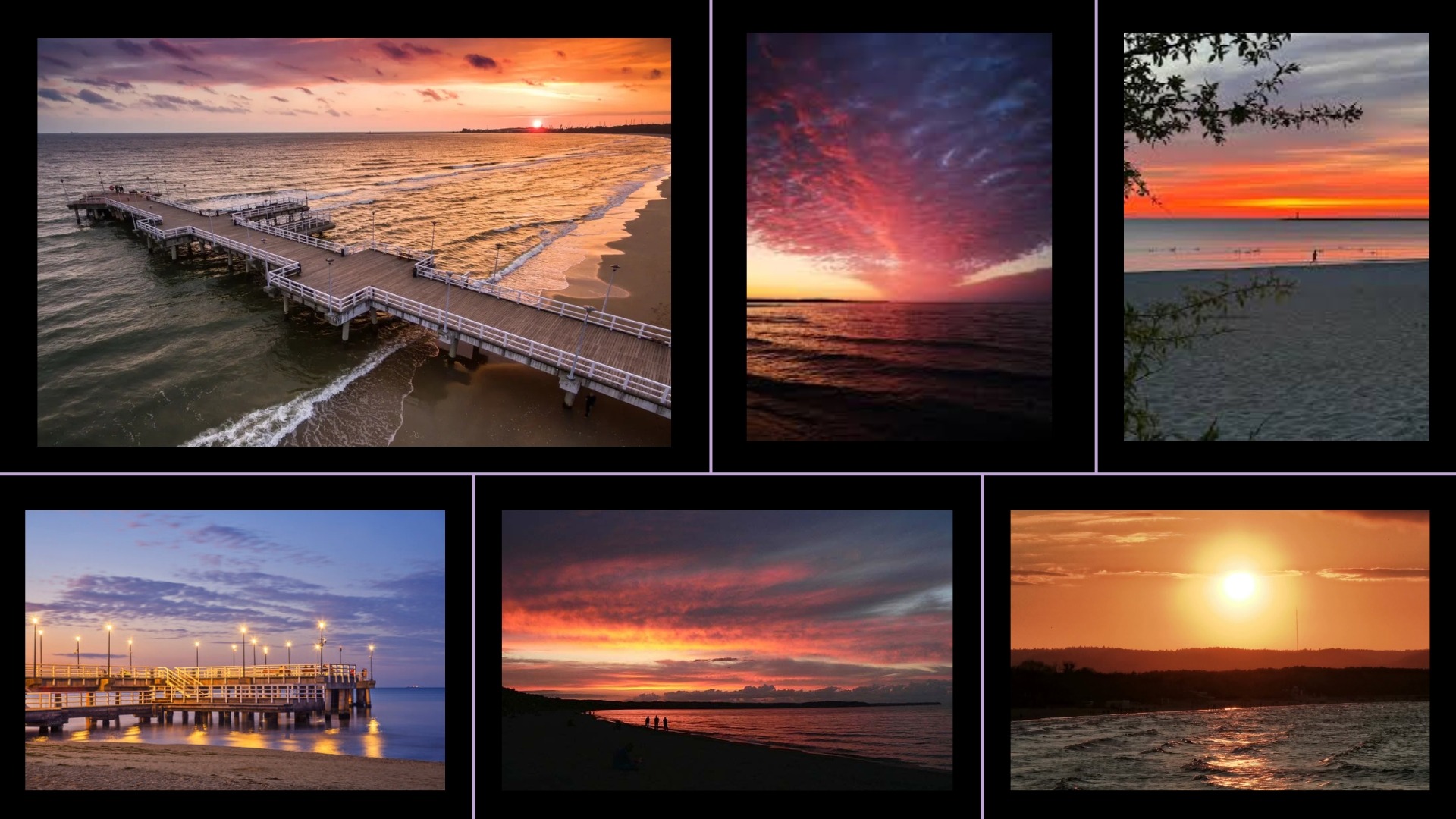
Brzeźno is the first beach that genuinely delivers a sunset over the Baltic in the classic sense of the phrase. The pier stretches 130 meters into the Bay of Gdańsk, and the sun goes down on the right side, where the water is still open. No land, no buildings.
You get water on three sides, an unobstructed horizon, and waves audible under the boards. The sun drops behind the waterline at the point where the bay turns into open sea. In winter and early spring, the pier is nearly empty, with no vendors and no music from beach bars. In summer, you'll have to fight a bit for a quiet spot, so a midweek golden hour beats a weekend one.
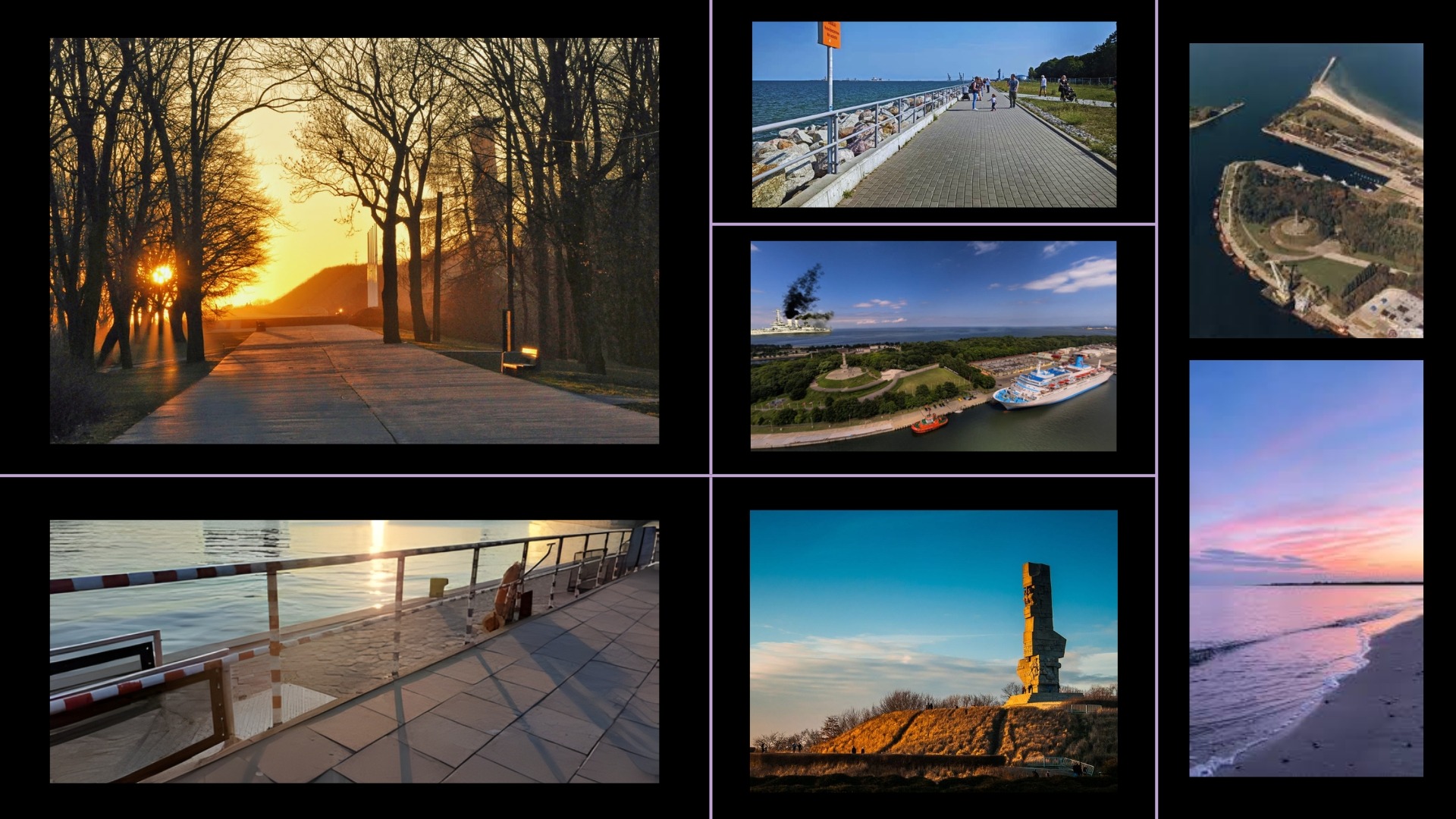
Sunset at Westerplatte
Most people associate Westerplatte with history and monuments. The promenade along the beach on the Sucharskiego Street side is its own story, one that rarely makes it into guidebooks.
The promenade runs right along the water, on the western side of the cape. You'll find benches and old planks, the sea on your left, and every so often a large ship cutting across your field of view, whether a container ship or a ferry leaving or entering port. The horizon stretches wide. The sun sets in exactly the direction the promenade faces. A sunset over the sea from this point comes with more wind and more open space than Brzeźno. It also comes with fewer people.
Off-beat spot in Ujeścisko
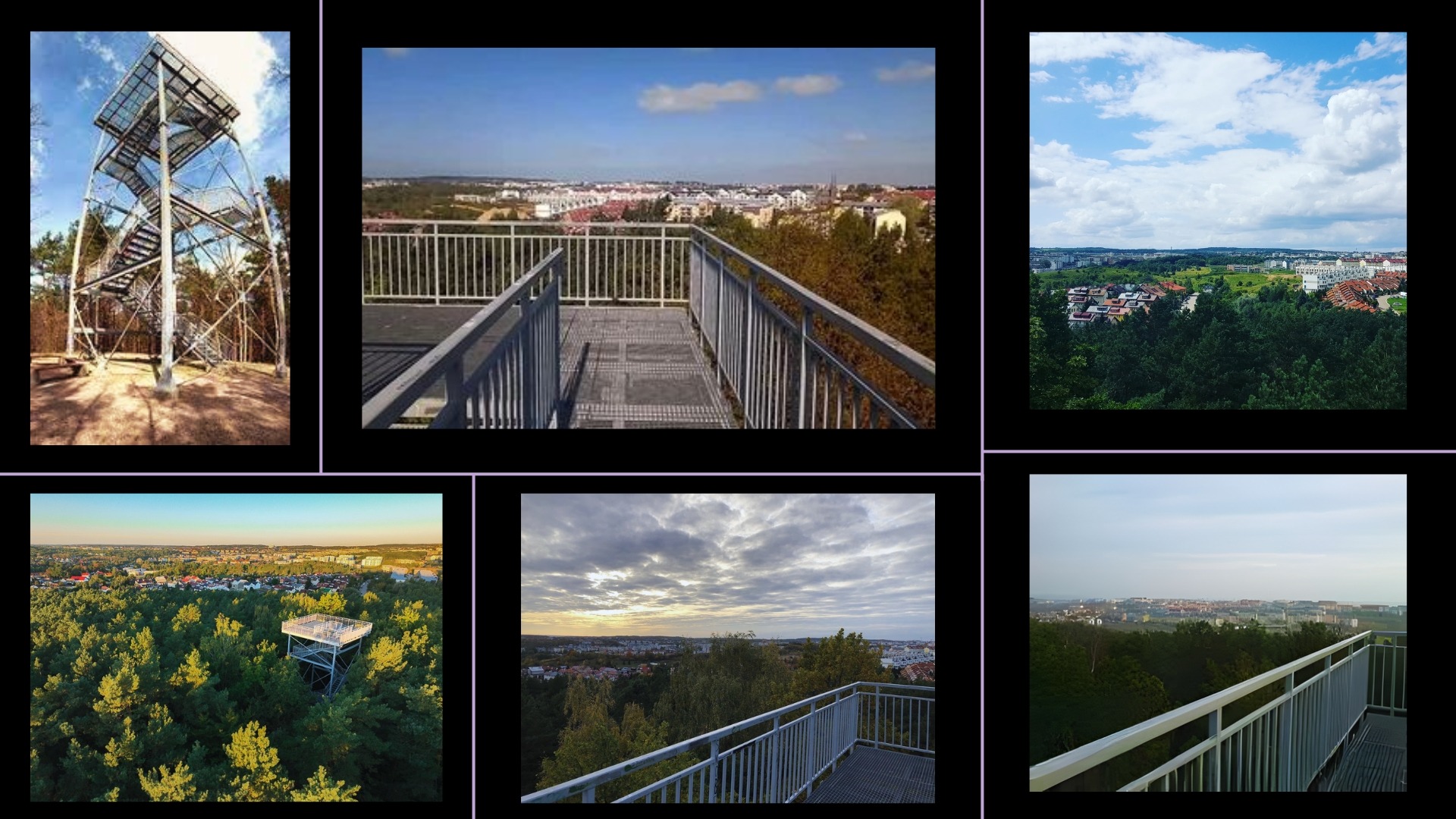
Kozacza Góra doesn't show up on tourist lists. It sits in Ujeścisko, on the edge of Gdańsk's residential districts, and that's exactly why crowds never form here, even at peak season.
The observation tower at the top opens onto a view of Gdańsk's southern districts and, when the air is clear, a slice of sea on the horizon. It isn't a 360-degree panorama like Pachołek, but the angle has its own appeal. Local scale, silence, and the feeling that you're somewhere that belongs a little to the people who know about it. Watching the sunset in Gdańsk from Kozacza Góra works precisely because of that contrast: the city in the distance, no tourist traffic.
For more on watching the city from above, check our roundup of Gdańsk viewpoints.
Baltic sunset outside the city
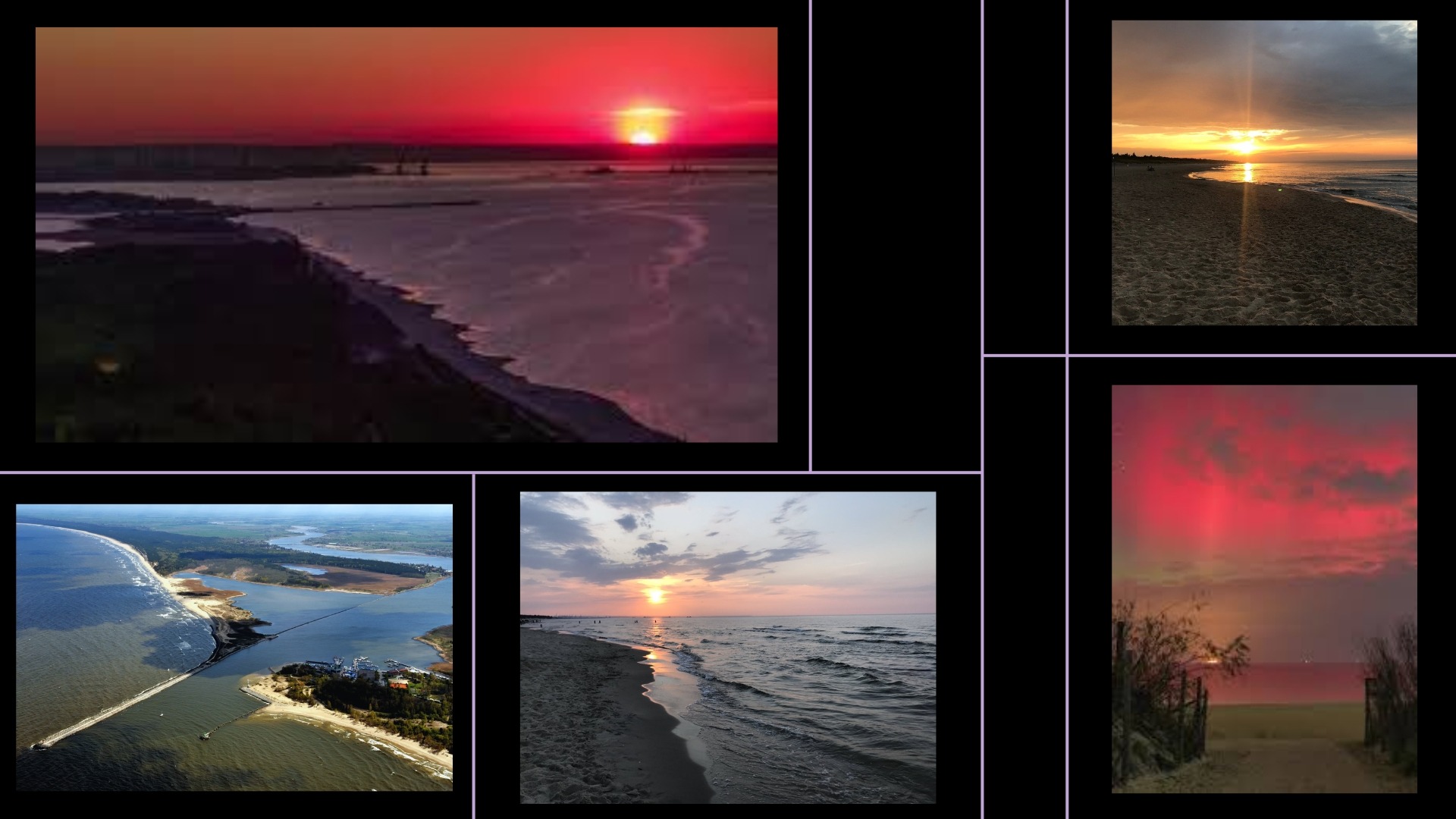
Sobieszewska Island sits 15 km from central Gdańsk and offers wildness on a different scale. You get forest right behind the dunes, a beach without concrete infrastructure along the shore, and water that has nothing in front of it all the way to Sweden.
Entrance #7 from Trałowa Street takes you through the forest for a few minutes straight to the beach. The horizon is clean. Water to the horizon, no buildings in frame, no observation platforms, no bars. In peak season, the popular entrances pull a crowd, so come with at least half an hour to spare. Before stepping onto the beach from the dune side, grab mosquito repellent. We're not joking.
Where to spend the evening after sunset
to.gather looks different from most places in Gdańsk. The interior is futuristic: neon lines, a reflective ceiling, and soft light that adjusts as the evening deepens. Every table has a lamp that gives you as much privacy as you want. The space is designed for sitting through the evening, not for fast turnover. When you walk in after sunset, the music is already playing, but it isn't overwhelming yet. Ambient turns into deep house gradually, as the night gets deeper.
The bar is a good place to start. Signature cocktails at to.gather are designed visually. Color picks up the venue's purple-and-neon identity, and the glassware does the work before you take the first sip. Expect smoke, gradients, and unexpected ingredients. There's also wine, sparkling wine, and non-alcoholic options led by matcha and craft lemonades. The drink menu isn't long, because every entry is intentional.
Cocktails make the first impression, but the dinner menu holds up. Modern European Fusion. Light, plated thoughtfully, with no overcomplicating what doesn't need overcomplicating.
This is the kind of place you come back to more than once. Not because of one specific drink, but because everything works together – the space, the music, and the people who show up. Sunset is a good start to the evening. to.gather is a good end.
After sunset, what's next?
A dozen-plus minutes of golden sky is a good start, not the end of the evening.
After sunset, there are still a few hours of evening left, and to.gather on Stępkarska Street fills them well. You'll find a futuristic interior, music that begins with ambient and keeps going, and signature cocktails with a visual take on what lands in the glass. It's a few minutes' walk from ECS, with no advance planning needed.