.jpg)
Matcha tastes vegetal, with creamy umami up front and an astringent finish that changes depending on the grade of the powder. Ceremonial is mild and subtly sweet. Culinary brings a bolder profile because its job is to cut through sugar in a cheesecake or alcohol in a cocktail. What matcha tastes like in practice depends on the quality of the powder, the water temperature, and everything surrounding it on the plate or in the glass. You can see that logic on the menu at to.gather restaurant in Gdańsk.
Why does matcha hit harder than loose-leaf tea?
Ground green tea made from Camellia sinensis leaves, shade-grown for three to four weeks before harvest. You drink the entire leaf, not a brew. Steeping extracts 15 to 30 percent of a tea leaf's active compounds, depending on temperature and time. The rest stays in the bag and goes in the trash. Matcha skips that filter. You consume the whole leaf and everything inside it.
Shading before harvest changes the leaf's chemistry. A plant deprived of direct sunlight produces more chlorophyll (that neon green color) and more L-theanine, the amino acid responsible for umami and natural sweetness. Catechin levels drop at the same time. Catechins are the compounds that create that sharp, bitter bite. The leaf ends up milder and creamier than it would be if it grew in full sun.

The history of this tea goes back to the 12th century. A Buddhist monk named Eisai brought tea seeds from China to Japan in 1191 and planted them near a temple in Kyoto. Zen monks drank matcha before meditation because L-theanine helped maintain calm focus through hours of sitting still. Samurai reached for it before campaigns because it delivered energy without agitation. Over time, matcha tea became a central part of the Japanese tea ceremony and one of the country's cultural symbols.
The way matcha is ground has barely changed since those centuries. After harvest, leaves are steamed, dried, and ground in stone mills (ishi-usu) at a speed of a few dozen rotations per minute. The low speed keeps the powder cool, preserving color, aroma, and the full flavor profile. One hour of milling produces just 30–40 grams of finished powder. That explains the price and an intensity no loose-leaf tea can replicate.
Three stages of a single sip
Most people say "grass" or "bitter" after their first encounter with matcha. That's about as accurate as saying coffee tastes like "burning." To understand what matcha really is from a flavor standpoint, you need to break it into layers. The flavor profile consists of three planes that appear one after another, and the sequence is what shapes the entire experience.
Umami up front
Umami is the fifth taste alongside sweet, salty, sour, and bitter. The word itself is Japanese and translates to "delicious," but that's a simplification. Umami is fullness and depth, the quality that makes your tongue want one more sip. In matcha, L-theanine and natural glutamic acid are responsible for this. Their levels rise when the bushes grow in shade. The longer the shading period, the more umami in the finished powder.
Ceremonial matcha from the first spring harvest (ichibancha) has the most. The taste is full, with a gentle "brothy" warmth that stays on the palate longer than any other note. People compare it to nori seaweed, edamame, or young spinach. Anyone familiar with Japanese cooking will recognize that type of fullness right away. Dashi and soy sauce work on a similar principle, but matcha's umami is more subtle, more vegetal, and lighter.
Where grassiness and bite come from
Behind the umami comes a layer of green, herbal notes. Fresh, grassy, close to the smell of a lawn mowed early in the morning. Chlorophyll gives them their intensity. Right behind that green freshness comes the bite from catechins. Catechins are polyphenols that add structure at low concentrations and clamp down on the palate at high ones, overpowering everything else in the profile.
The ratio of L-theanine to catechins determines if matcha tea "pulls you in" or "pushes you away." Ceremonial has a lot of L-theanine and few catechins, so the pucker is barely noticeable. Culinary flips those proportions. On purpose. That powder needs to cut through fat, sugar, or alcohol in a finished dish.
Sweetness on the finish is a quality signal
The third layer shows up at the end. A natural, delicate sweetness from amino acids that has nothing to do with added sugar. It's background, not foreground. A quiet accent that smooths out the catechin intensity and leaves a clean, pleasant ending on the palate. The higher the grade, the more distinct and longer the finish gets. You won't find it in cheap supermarket matcha. The amino acid content is too low to balance the catechins.
Texture changes everything
Matcha's consistency is part of its taste, and that's the part nobody talks about. Properly frothed matcha (thick, creamy foam from a bamboo chasen whisk or an electric frother) tastes smoother and fuller than the same serving stirred with a spoon. The foam spreads the liquid over a larger surface of the palate, quiets the catechins, and pulls umami to the front.
Without foam, matcha is watery and sharp. Same powder, same temperature, same amount of water. A completely different experience. That's why matcha at a good café or restaurant tastes different from the one brewed at home. A chasen whisks matcha in a "W" motion, incorporating air in tiny bubbles. That's where the creaminess comes from. No shaker or kitchen whisk can replicate it.
What are the differences between types of matcha?
The gap between the cheapest supermarket matcha and ceremonial-grade matcha from Uji is comparable to the gap between boxed table wine and a good vintage Burgundy. The raw material comes from the same plant (Camellia sinensis), but harvest number, leaf age, and grinding technique push the flavor into completely different territory.
Ceremonial
Ceremonial matcha comes from the youngest leaves at the top of the bush, picked in spring after extended shading. Veins and stems are removed, and only the leaf flesh (tencha) goes into the stone mill. The result is a bright, intensely green powder with silky consistency, creamy umami, and minimal astringency. You drink it with water, no additions. The traditional Japanese tea ceremony (chanoyu) uses this grade exclusively. The Uji (Kyoto) and Nishio (Aichi) regions produce the most prized batches.
Two brewing formats produce very different experiences. Usucha (thin tea) is lighter, with a delicate foam. Koicha (thick tea) is almost creamy, with more powder per less water. Same grade, same powder, but koicha tastes like a concentrated version of what usucha gives you.
Premium
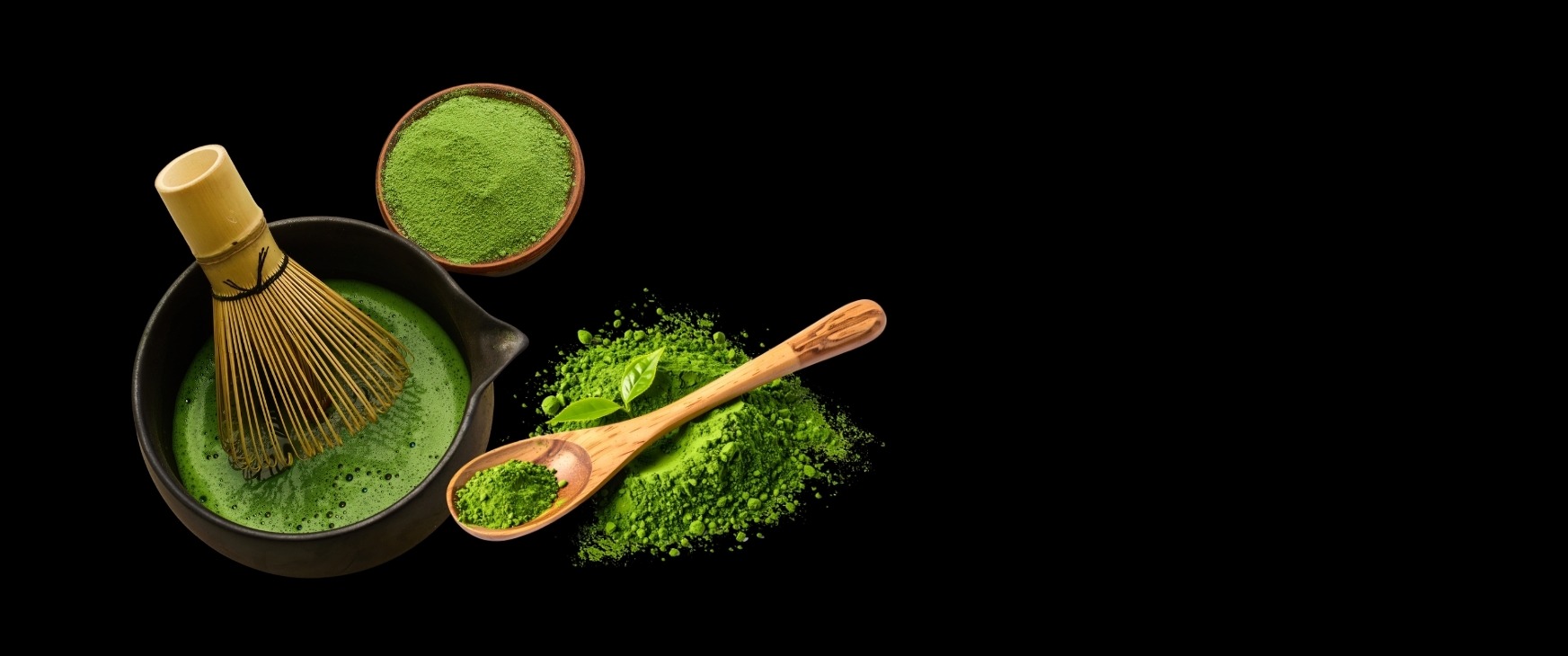
Premium matcha is a blend of the first and second harvests. It has a more noticeable dry edge than ceremonial but keeps a lively green color and good umami depth. It works well day to day: hot, iced, in a latte with oat milk. Ceremonial is too expensive for a daily latte. Culinary is too intense to drink straight. Premium lands right in the middle.

Culinary
Culinary matcha comes from the second or third harvest. The leaves are older, more mature, more sun-exposed, meaning more catechins and less L-theanine. The color can lean olive, where ceremonial is neon. The flavor is bold, clearly tea-like, with a gripping dryness that can catch you off guard on its own.
Pastry chefs and bartenders reach for this grade specifically because mild ceremonial would dissolve in a finished dish without leaving a trace. Culinary leaves its signature.
Ceremonial matcha is like a bar of good dark chocolate, ready to eat as is. Culinary is like baking cocoa. Both products have value, but in different settings.
What does matcha do inside the body?
Matcha's properties are tied directly to its chemical makeup. The same substances that create umami, bite, and sweetness on the palate keep working after you swallow.
One serving of matcha tea (1–2 g of powder) contains 30 to 70 mg of caffeine. Espresso delivers 63–80 mg, drip coffee 95–200 mg. The numbers look similar, but the feeling is different. L-theanine, the amino acid behind umami in the flavor, slows caffeine absorption, smooths out the stimulation curve, and extends it to 4–6 hours. Energy builds gradually, no racing heart and no mid-afternoon crash that many people know from their second coffee.
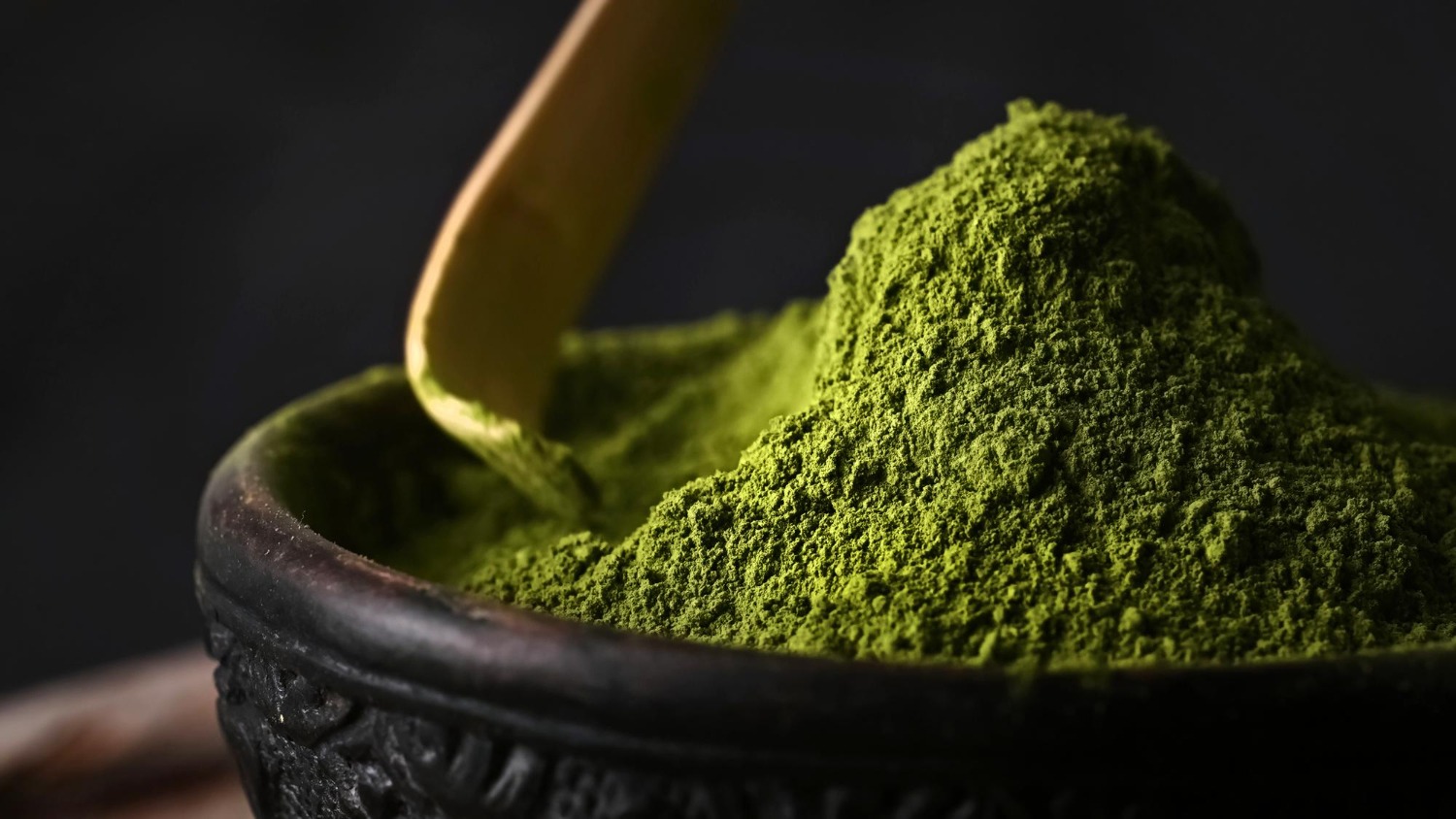
Drinking matcha means delivering the entire ground leaf to your body, not a brew strained from the solids. That translates to higher concentrations of antioxidants, primarily EGCG (epigallocatechin gallate) and chlorophyll. Research indicates that consuming the whole leaf delivers a far higher dose of catechins than a brew, but the exact ratio varies by grade and preparation. EGCG neutralizes free radicals and supports immune function. Chlorophyll, the same pigment that gives matcha its color, may support the body's natural detox pathways. Matcha also supplies vitamins A, C, E, K and minerals (potassium, iron, magnesium). A single serving without milk or syrup is 3–6 kcal.
Matcha is a beverage, not a supplement. It supports the body but does not replace a balanced diet or medical treatment. People taking medication, pregnant women, and those with high blood pressure should consult a doctor before drinking it regularly.
How does the same powder taste different in a cake and in a glass?
The taste of matcha dissolved in water is only a starting point. When the powder enters an environment of fat, sugar, or alcohol, the flavor profile rearranges itself. Some layers quiet down; others move to the front.
Matcha in dessert
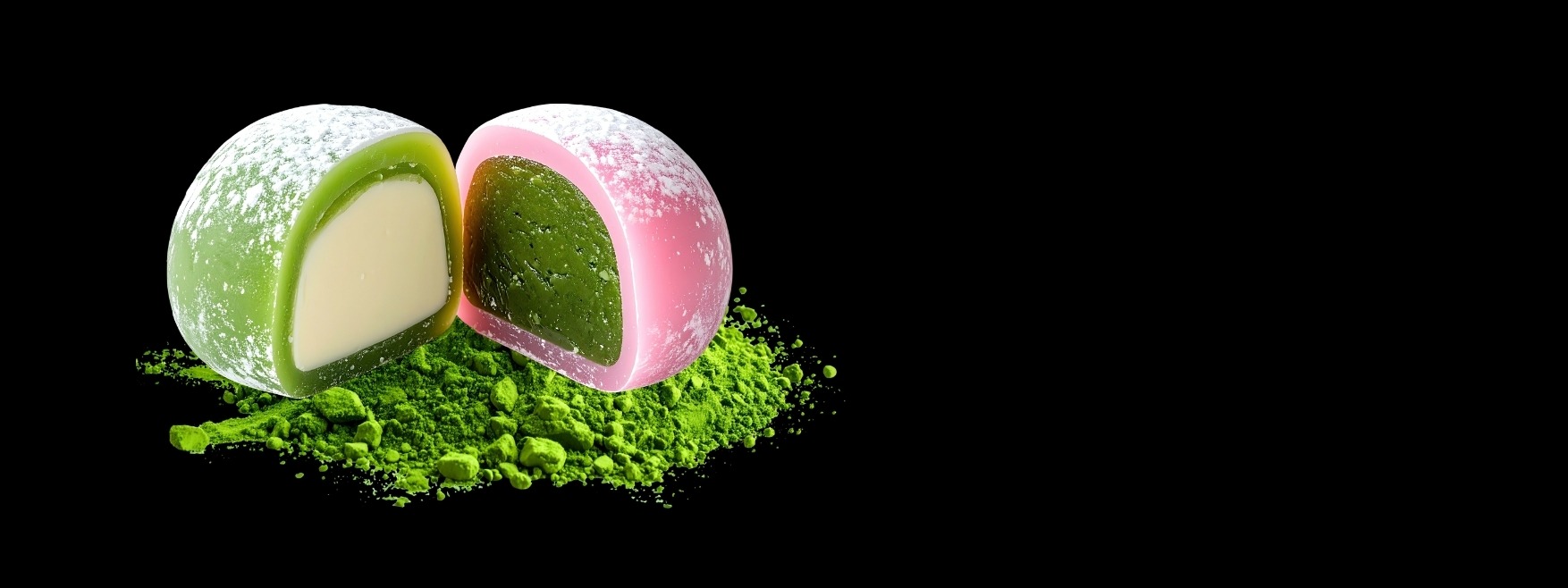
Culinary matcha in desserts acts as a flavor brake. Grassy, tea-forward powder meets fat and sugar. It takes away one-dimensional sweetness and adds depth. Fat coats the powder particles and slows catechin contact with the palate, so you get a gentle tea note in place of a sharp pucker. Matcha pairs well with white chocolate, yuzu, coconut, and vanilla.
That logic is the backbone of the Sernik Matcha (matcha cheesecake) on the to.gather menu. A creamy cheesecake with matcha, yuzu syrup, powdered sugar, and an edible flower. The tea-driven astringency of the cream meets the citrus tartness of yuzu, and both sides amplify each other. The first impression is the creaminess of the cheese. Behind it comes the tea note from the matcha. On the finish, yuzu lifts the whole thing and leaves a citrus clarity.
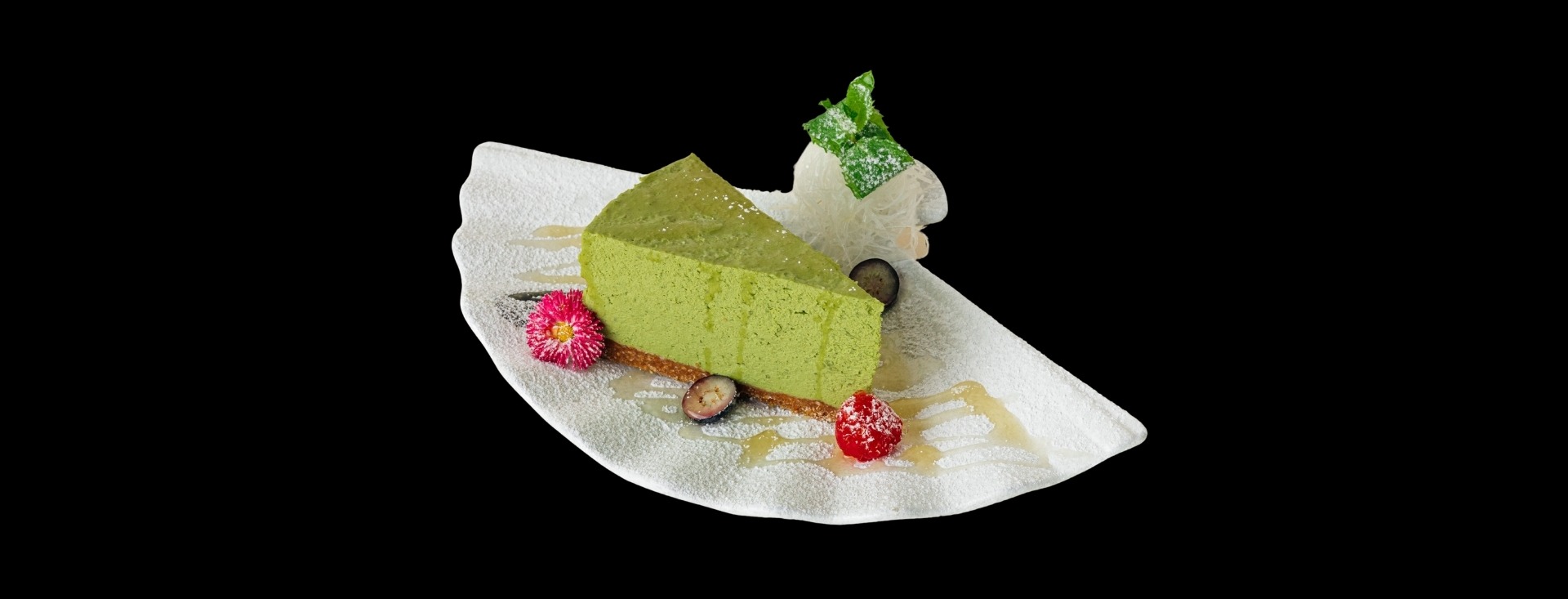
Yuzu is a Japanese citrus with a profile somewhere between grapefruit, mandarin, and lime. The acidity is clear but warmer than lime's. The pairing with matcha works because both ingredients share Japanese flavor DNA and both operate on the border between freshness and gentle bitterness.
Matcha in a cocktail
Matcha brings three qualities to a drink that most classic bar ingredients lack: earthy depth, a tea-like character, and a deep green color. It pairs well with gin (a botanical base and the grassiness of the powder play together), vodka (a clean backdrop that doesn't overpower the tea), and citrus liqueurs (acidity balances the powder's dryness).
An example from the to.gather menu is the Zen Sour. Gin macerated with matcha, yuzu syrup, citrus cordial, sugar syrup, and egg white. Macerating the gin with matcha means the tea notes enter the alcohol itself. They're not a garnish on a finished drink but its base. The egg-white foam gives a velvety texture and softens the alcohol's punch. Yuzu steps in as a citrus counterpoint, and matcha leaves a tea-forward, earthy finish that stays on the palate long after the last sip.

How to not give up on matcha after the first try?
Three things that make a difference at your first encounter with matcha.
- Start with a latte, not a straight brew. Milk (dairy, oat, rice) quiets the catechins and gives you a reference point closer to what you already know. Ceremonial matcha straight up as a first contact can be off-putting.
- The powder's color tells you more than the price tag. Neon green and a silky, lump-free texture are signs of a good grade. A yellowish tint and clumpy structure signal a lower grade or bad storage.
- Try matcha in a finished dish. A dessert or cocktail with matcha is a gentler entry point than brewing from powder on your own. The chef and bartender have already solved the proportion equation for you.
Gdańsk has a few places that work with matcha seriously. At to.gather, the flavor shows up in desserts and cocktails alike. Sernik Matcha and Zen Sour are two different formats of the same powder that you can compare in one evening. A good way to test what matcha tastes like is depending on what surrounds it.